Indoor Cat Enrichment: DIY Toys, Play & Home Setup
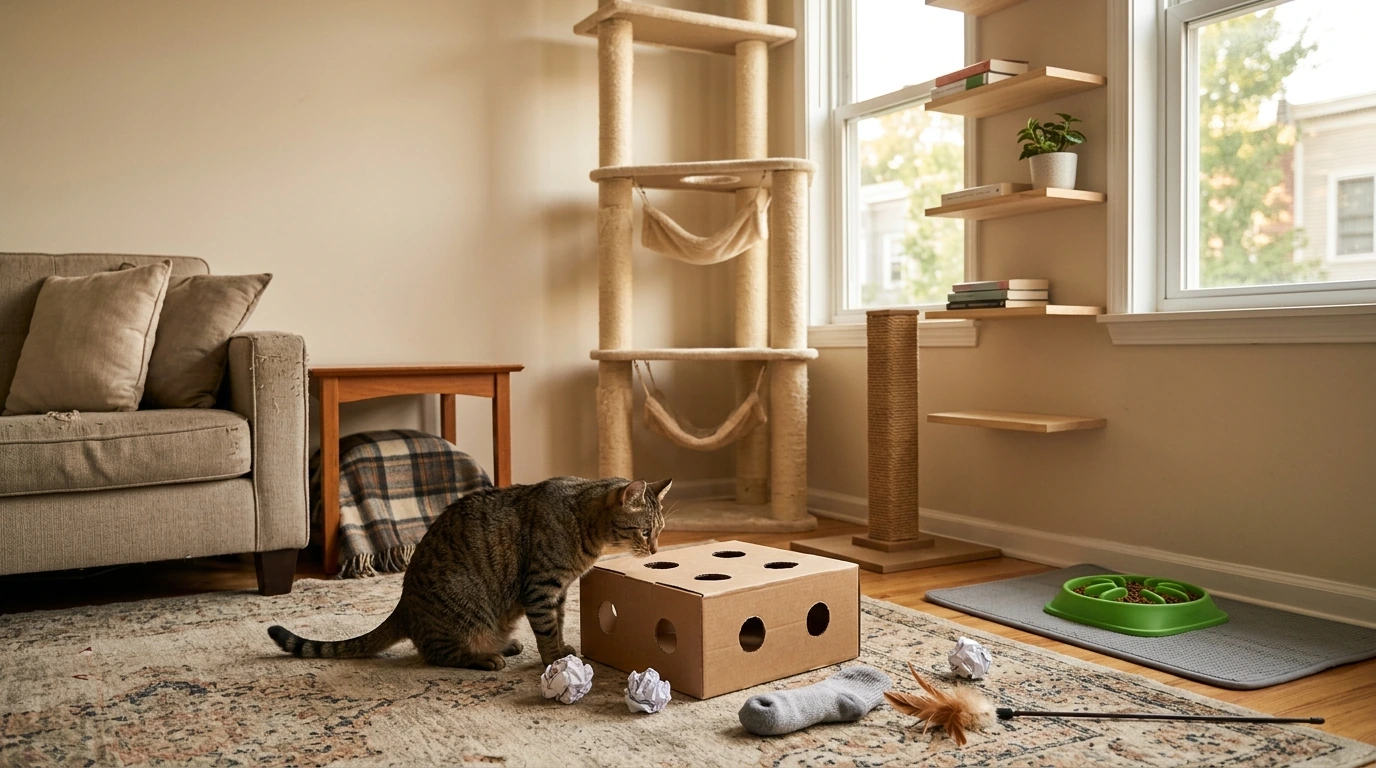
Enrichment Ideas for Indoor Cats: DIY Toys, Play Routines, and Cat-Friendly Home Tips
Indoor cats thrive when their day includes hunting-style play, climbing, scratching, problem-solving, and calm recovery time. A few small changes—short “micro-sessions” of play, rotating toys, adding vertical routes, and making meals more interesting—can reduce boredom behaviors like nighttime zoomies, overgrooming, and attention-seeking. The ideas below focus on easy wins for busy households and small spaces, using simple materials and a repeatable weekly rhythm.
Signs an indoor cat needs more enrichment
- Energy spikes at night, frequent yowling, or restless pacing when the home is quiet
- Play that turns into ankle-biting or “ambush” behavior during routine tasks
- Overgrooming, excessive shedding from stress, or increased hiding without an obvious cause
- Scratching furniture despite having scratchers (often a placement/variety issue)
- Gulping meals quickly, begging constantly, or scavenging counters (food-seeking needs an outlet)
Note: Sudden behavior changes can signal illness or pain. Schedule a veterinary check if changes are abrupt, severe, or paired with appetite or litter box changes. For additional guidance, see the American Association of Feline Practitioners (AAFP) Feline Behavior Guidelines.
Build a simple daily rhythm: hunt, eat, groom, sleep
- Aim for 2–4 short play sessions (5–10 minutes) instead of one long session; stop while interest is still high.
- Use a wand toy to mimic prey: slow stalk → quick dart → pause (let your cat “catch” it regularly).
- End play with a small meal or treat to complete the hunt sequence and encourage calm downtime.
- Reserve high-intensity play for late afternoon/evening to reduce nighttime disruptions.
- For multi-cat homes, play separately when needed to prevent competition and frustration.
| Time window | Goal | What to do | Duration |
|---|---|---|---|
| Morning | Start calm + confidence | 1 wand session, then breakfast in a puzzle feeder | 10 min play + meal |
| Midday | Reduce boredom | Window perch time + “find the treats” scavenger hunt | 5–10 min |
| Late afternoon | Burn energy | Chase-style wand play with jumps and turns; finish with a small snack | 10–15 min |
| Evening | Settle for the night | Low-arousal play (kicker toy, gentle fetch) + grooming/brush | 5–10 min |
DIY enrichment toys that cost almost nothing
- Paper-bag “tunnel”: Remove handles, add a few crumpled paper balls inside. Supervise if chewing occurs.
- Sock kicker: Fill a long sock with fabric scraps and tie off. Add a pinch of catnip for adult cats who respond well.
- Cardboard “foraging box”: Cut peek holes in a shipping box and toss in ping-pong balls or a few treats to bat out.
- Toilet-paper-roll treat puzzle: Fold one end, add kibble, fold the other end. Start easy and increase difficulty.
- Ice-cube enrichment (for some cats): Freeze diluted broth approved by a vet; offer on a washable mat and discontinue if it causes frustration.
Choose materials that are sturdy and easy to clean, and retire anything that sheds strings, fragments, or sticky residue. For general cat care basics, the AVMA cat care resources are a dependable reference.
Toy rotation that keeps novelty high (without buying more)
- Keep 3–5 toy “categories”: wand, small prey, kicker, puzzle/foraging, and a comfort toy.
- Rotate weekly: store most toys out of sight in a bin, then reintroduce a few to renew interest.
- Refresh scent: rub toys on a clean towel that has your cat’s scent; store catnip toys in a sealed bag.
- Retire damaged toys promptly (loose strings, cracked plastic, exposed stuffing) to prevent ingestion hazards.
- Use play “rules”: hands are never toys; redirect to a kicker or wand immediately if biting starts.
Make the home more cat-friendly: vertical space, scratching, and safe hiding
- Add vertical routes: A tall cat tree, shelves, or sturdy furniture “stepping stones” help cats move without feeling trapped.
- Place scratchers where your cat already scratches: Often near entryways, couch corners, or sleeping areas.
- Offer both orientations: At least one tall vertical scratcher and one horizontal scratcher; texture variety helps (sisal, cardboard).
- Create predictable safe zones: A covered bed, a quiet room corner, or a shelf perch; keep litter boxes and food away from high-traffic stress points.
- Window enrichment: Add a perch near a window, and consider a bird feeder outside (safe placement and regular cleaning matter).
Environmental set-ups that match natural feline needs can reduce stress and conflict—especially in smaller homes. International Cat Care offers practical ideas on the environmental needs of cats.
Food-based enrichment: slow feeding and “work for it” meals
A weekly plan that prevents boredom (especially for busy schedules)
Printable guide: a ready-to-use checklist and routine builder
Recommended printables (digital)
- Printable cat enrichment guide with DIY toys, play routines, and home tips
- A Guide to Safe Space Mapping (digital ebook) for organizing calm zones and household routines
FAQ
How much play does an indoor cat need each day?
Most indoor cats do best with 2–4 short play sessions per day (about 5–10 minutes each), adjusted for age and health. Let your cat “catch” the toy during play, then offer a small meal or treat to help them settle.
What are safe DIY cat toys, and what should be avoided?
Safe DIY options include paper bags (handles removed), sturdy cardboard boxes, rolled paper balls, and treat puzzles made from paper towel/toilet paper rolls. Avoid strings, ribbons, rubber bands, tinsel, and small detachable parts, and discard any toy that becomes frayed or breakable.
How can enrichment help with nighttime zoomies?
Shift the most active play to late afternoon or early evening, then finish with a small meal to complete the hunt-eat-groom-sleep cycle. Add food puzzles earlier in the day to reduce boredom, and contact a veterinarian if nighttime hyperactivity is a sudden change.











Leave a comment