Indoor Cat Enrichment Ideas for Easily Bored Cats
What are the best indoor cat enrichment activities for cats that get bored easily?
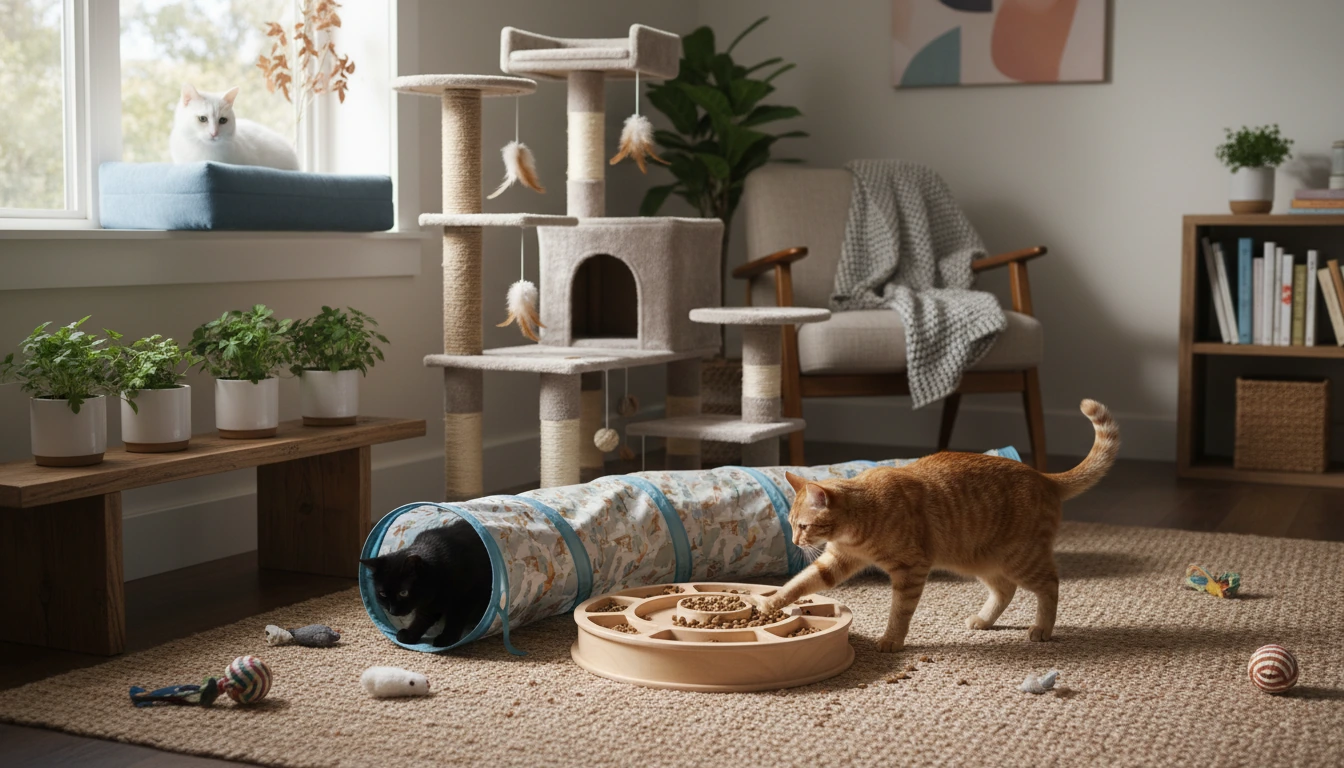
The best indoor cat enrichment mixes hunting-style play, problem-solving, and fresh territory to explore. For cats that get bored fast, the key is rotating activities so the same toy doesn’t feel “solved” after a day.
1) Daily “hunt” play sessions
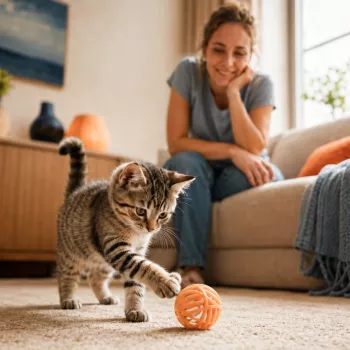
Use wand toys, ribbons, or a plush “prey” and mimic real movement: hide behind furniture, pause, then dart away. Aim for two short sessions (5–10 minutes each), ending with a small treat or meal to complete the hunt-eat-groom-sleep cycle.
2) Puzzle feeders and food scavenger games
Replace some bowl feeding with puzzle toys, treat balls, or a DIY “treasure hunt” where you hide kibble in a few safe spots. This adds mental work and slows fast eaters, while giving bored cats a job to do.
3) Rotate toys like a “toy library”
Keep only 4–6 toys out and store the rest. Swap weekly so old favorites feel new again. Add novelty with textures (crinkle, kicker toys, soft mice) rather than constant brand-new purchases.
4) Build vertical territory
Cat trees, window perches, and wall shelves expand usable space and reduce restlessness. Place one lookout near a window for “cat TV,” and another in a quieter zone for decompression.
5) Scent and sound enrichment
Offer cat-safe scents occasionally (catnip, silvervine) and switch them up. You can also play short “bird” or “cricket” audio while supervising to keep arousal from tipping into frustration.
6) Training and tiny challenges
Clicker training, “touch” cues, sit/spin, or jumping onto a target mat can drain mental energy quickly. Keep sessions under 3 minutes and end before your cat loses interest.
For more DIY toys, play routines, and room-by-room setup ideas, visit this indoor cat enrichment guide.
FAQ
How often should I rotate my cat’s toys?
Rotate weekly for most cats, or sooner if your cat ignores what’s out for two days in a row. Keeping a small “active set” makes each swap feel more exciting.










Leave a comment